



The Space In-Between
There is a space between the stimulus and the response. Viktor Frankl wrote about it. We all know it intellectually. We quote it. We aspire to it. But living in it is a different matter entirely.
Most of us treat that space like a vacuum. We are terrified of it. At least I have many times.
Watch two people talking. Are they actually listening to one another? Or are they just reloading? Are they waiting for the other person to finish so they can prove a point, defend an ego, or validate their existence? If you are in the latter group, you are not responding. You are reacting. You are treating the silence as a gap in the signal, and you are rushing to fill it with noise before the signal fades.
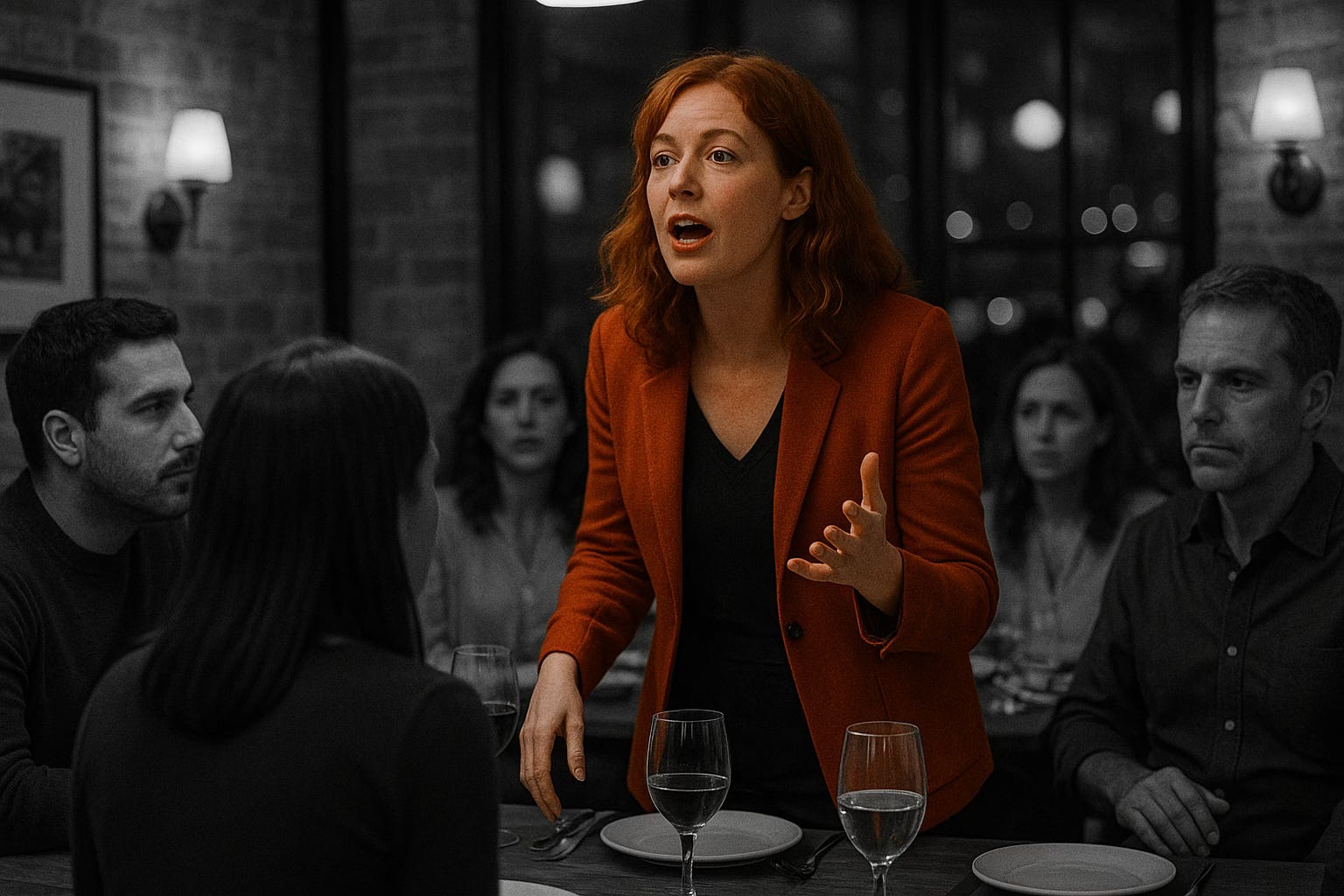
I have lived there for most of my life and I treated silence as a threat. In business meetings, I raised my voice to ensure I was “on the record.” At social dinners, I talked over friends because the pause in conversation felt like a drop in status. I thought I was engaging but in reality, I was just soothing a nervous system that equates silence with invisibility.
We do this because we are designed for validation. We are wired to protect ourselves, and somewhere along the way, we learned that “not taking action” is dangerous. It implies we are exposed and that we are not in control.
So we kill the wait. We react impulsively to fill the void, what I refer to as the space in-between. The space that allows you to evaluate and respond, and not just simply react. And in doing so, we simply give up our power.
The Biology of the Void
To understand why waiting is so physically uncomfortable and sometimes painful, you have to look at the biology.
Watch yourself the next time you are forced to wait. In line at the grocery store or the lobby of a dentist’s office. At that instant when the forward motion stops, the itch begins.
The silence feels heavy and it crawls into your skin.
Your brain, deprived of the dopamine hit of “progress” or “input,” begins to panic. It creates a narrative that something is wrong and that you are wasting time. That you are missing out. The good old FOMO takes over. So you reach for the phone, and you scroll. You smile at a screen and inject artificial noise into the system to drown out the void.
We call this boredom. But it isn’t boredom. It is withdrawal. It is the desperate attempt of a high-velocity nervous system to find a new object of focus so it doesn’t have to sit with itself.
In a grocery line, the cost of this inability to wait is just a few wasted minutes on Instagram. But in high-stakes domains, like in leadership, in negotiations, in the financial markets, the cost can be catastrophic.
The Trap of the Open Market
I learned the cost of the void the hard way.
Years ago, we decided to relocate and sell our home. We were in the middle of a booming housing market, a time when properties were moving in days, not months. The narrative everywhere was “velocity.” Prices were up and demand was way up high. It should have been easy.
But our house did not move.
We sat on the market one week. Then two. Then a month. The silence began to creep in. The realtor, sensing our anxiety, filled the gap with excuses. The layout is tricky. The bathrooms need updating. It needs more amenities.
Logic would have told us to hold. The market was hot; the asset was great. But the silence was way out too loud. We had already relocated, and the distance amplified the distortion. I wanted to be done and to close the loop. The “Wait” wasn’t just a delay; it felt like a personal failure.
Then, finally, an offer. It was fair. Good, even. We agreed. The relief was immediate, the dopamine hit of “action.”
But then, the buyer went dark. Silence again. No updates. No inspection reports. Just the void. And then, at the eleventh hour, they pulled back. They found “issues.” They wanted to lower the price.
My nervous system flared. I felt insulted. I felt unsafe. So we went back to market.
Another month passed. The market was still booming around us, but our phone wasn’t ringing. The silence became deafening. I began to doubt everything. First, doubt the asset. Then I began to doubt the price. And then I even began to imagine scenarios where we were stuck with the property forever.
A few weeks later, in a move that should have been transparently manipulative, the original buyer returned. They presented a new offer. significantly lower than the first one. A trap.
If I had been operating from a place of “Inner Architecture,” I would have seen it for what it was: a leverage play. I would have seen that they came back because they wanted the house, and their silence was a tactic.
But I wasn’t operating from architecture. I was operating from the void. I was exhausted by the waiting and most importantly, I couldn’t tolerate the uncertainty anymore. I wanted the noise to stop.
So we accepted.
We sold the house to stop the feeling of the wait.
Months later, I watched that same buyer flip the property. They did some renovations and then they simply held it, waited for the right moment, and sold it for a healthy profit.
I wasn’t beaten by the market. I wasn’t beaten by the buyer. I was beaten by my inability to sit in the dark. I was manipulated because my need for “resolution” was stronger than my need for “value.”
Bullets in the Dark
This pattern didn’t end with the house. It reflects in my current work every single day.
In trading, waiting is not a virtue. It is a position. It is the primary job description. The financial markets pay you for the quality of your waiting, not the frequency of your actions.
I wrestle with this daily, even though I know the concept: Quality over Quantity. I know I should wait for the precise setup, the specific number, the high-probability moment. I know the odds are stacked in my favor only when the stars align.
But getting there takes time and the time is empty.
I sit at my desk watching the screen and waiting. Then the setup is 80% there. The price is approaching my level but not there yet. But the silence stretches on. Ten minutes. An hour. Two hours. My brain starts screaming that I am missing out and that I am invisible to the market. That I need to “do” something to “be” a trader.
The discomfort builds in the chest and the shoulders. It feels like danger and like I am losing control.
So I enter early. I fire a bullet into the dark just to feel the recoil.
I choose the feeling of doing over the result of being. I choose to “shoot bullets all over the place” because I cannot bear the weight of the silence, of inaction because I am supposed to be doing. I trade the capital in my account for a momentary hit of dopamine, just to prove I am still in the game.
And inevitably, the market turns. The setup wasn’t ready and the bullet misses. And I am left with a loss that belongs entirely to my inability to wait.
Strategic Tolerance
The shift happens when you realize that waiting is not passive.
We mistake patience for resignation. We think waiting means “doing nothing.” And to a high-performer, doing nothing is death.
But real waiting is an active state. It is Strategic Tolerance.
Think of a sniper. A sniper lying in the grass for three days is not “doing nothing.” They are holding a state of immense, active tension. They are regulating their breath. They are monitoring the wind and filtering the signal from the noise. They are vibrating with readiness, but they are completely still.
That is the wait we are after.
It is the ability to hold your fire until the target is actually in range. It is the ability to let the realtor’s excuses wash over you without internalizing them. It is the capacity to let the buyer sit in their silence, without rushing to fill it with your own concessions.
The Protocol of the Pause
How do we build this? We cannot just “decide” to be patient. We have to train the nervous system to tolerate the void.
It starts with reframing the sensation.
When you are in the wait, whether it in a simple conversation, or is for a job offer, or a reply to a difficult email, you will feel the itch. You will feel the tightness in the chest. You will feel the urge to “check in,” to “tweak,” to “force.”
That feeling isn’t a signal to act. It is a signal that your “Old Contract” is flaring up. It is your body asking: Are we safe?
When that happens, try this:
Name the Void. Say it out loud. “I am feeling the urge to act because I am uncomfortable with the silence.”
Verify the Signal. Ask: “Has the external reality changed, or has my internal tolerance just run out?” (Usually, the market hasn’t changed; you just got tired of watching it).
Hold the Line. Remind yourself that doing nothing is often the most aggressive move you can make.
The buyer who flipped our house knew something I didn’t. He knew that the person who can tolerate the silence longest owns the deal. He didn’t outsmart me. He out-waited me.
Your work this week and moving forward is to notice where you are rushing to close the gap. Notice where you are speaking just to be heard. Notice where you are trading just to be in motion.
Stop. Breathe into the discomfort. Let the silence get loud.
And wait for the target to come to you.